
141m Nigerians To Live In Poverty This Year, Says PwC
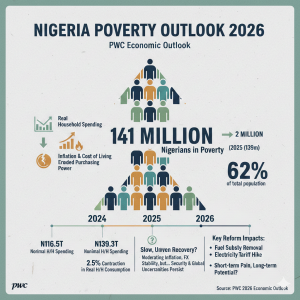
According to PwC’s 2026 Economic Outlook, the worsening outlook reflects the cumulative impact of long-standing structural weaknesses, global economic headwinds and the short-term adjustment costs associated with far-reaching domestic reforms.
Poverty levels are projected to reach 62 per cent of the total population in 2026, reflecting the combined effects of legacy policy gaps, global shocks and the short term costs of ongoing reforms,” PwC stated.
The company, however, noted that, poverty outcomes could stabilise over time if reforms are complemented by expanded social protection, productivity-driven growth and improved macroeconomic conditions, even as near-term pressures persist.
The President Bola Ahmed Tinubu-led administration had embarked on a sweeping market-oriented reform programme nearly three years ago, aimed at restoring stability and predictability to an economy long characterised by volatility.
Measures such as the removal of petrol subsidies, electricity tariff adjustments and the liberalisation of the foreign exchange market have helped correct deep seated distortions and strengthen public finances. Still, they have also triggered sharp increases in the cost of living, eroded household purchasing power and pushed more Nigerians into poverty.

Nominal household spending rose by 19.6 percent from N116.5 trillion in 2024 to an estimated N139.3 trillion in 2025, reflecting rising prices rather than improved welfare.
In real terms, however, household consumption contracted by 2.5 percent from N12.2 trillion to N11.9 trillion over the same period, underscoring the depth of the squeeze on living standards and suggesting that poverty pressures are unlikely to ease quickly.
Higher food prices, transportation costs and other essential household expenses primarily drove the decline in real spending. Food inflation, although easing towards the end of 2025 due to improved harvests and exchange rate stability, has remained a significant drag on household welfare, particularly in urban centres and conflict affected rural areas.
PwC also highlighted insecurity in food producing regions and climate related shocks as additional factors sustaining high food prices.
Looking ahead to 2026, the PwC report anticipates a gradual recovery in real household consumption, driven by moderating inflation, improved foreign exchange stability, and easing global financial conditions.
However, the pace of recovery is likely to be slow and uneven, constrained by persistent price pressures, tight monetary conditions and limited fiscal space.
The outlook, it said, is further complicated by security challenges and global uncertainties. Rising insecurity continues to disrupt agricultural production and supply chains, while geopolitical tensions and softer global growth could weaken external demand and oil revenues, limiting the government’s capacity to scale up social spending.





