Naira Battling Pressure Despite Regulatory, Fiscal Interventions
BY CEES HARNON
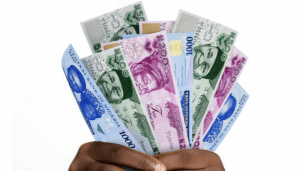
The naira has continued to face downward pressure against the United States dollar despite a series of regulatory and liquidity interventions by the Central Bank of Nigeria(CBN) and fiscal authorities aimed at stabilising the foreign exchange market.
After sharp depreciations in 2024 and early 2025, the currency traded within a relatively broader band in late 2025.
However, market data indicate persistent weakness, particularly, during periods of heightened dollar demand.
In late March 2025, the naira fell to about N1,550 per dollar in Nigerian FX markets before stabilising around similar levels in subsequent months.
Official foreign exchange figures for December 2025 showed the currency closing at roughly N1,456/$1, amid lingering demand pressures linked to increased business activity and import requirements during the festive season.
The depreciation occurred despite continued foreign exchange injections by the central bank.
Market analysts attributed the currency’s performance to a mix of structural and seasonal factors. A senior foreign exchange trader in Lagos said holiday-related demand for dollars from importers and individuals typically exerts pressure on the naira.
“Holiday period FX demand often spikes as importers and individuals seek dollars, which usually weakens the naira,” the trader said.
“Even with CBN interventions, demand-side pressure can outweigh supply in certain periods.”
In the first weeks of 2026, official data suggested the naira traded in the N1,390 range at the start of February, reflecting temporary stability following sustained liquidity injections and measures to enhance transparency in the FX market.
The reopening of the official FX window to licensed Bureau de Change operators further supported the currency, reportedly strengthening it to around N1,348/$1 in early February, its strongest level in more than a year under the official regime.
Despite these periods of relative firmness, analysts warned that underlying vulnerabilities persist, particularly outside the official market.

Although the gap between official and informal exchange rates narrowed at intervals, divergence between the segments continued to signal uneven liquidity and speculative pressures.
Policy reforms, including the introduction of the Electronic Foreign Exchange Matching System (EFEMS) to improve transparency and price discovery, were credited with helping to moderate extreme volatility.
Between late 2024 and early 2025, reform measures contributed to the naira’s appreciation from around N1,640 to near N1,510 per dollar, according to market data.
Nigeria’s external reserves remained above $45 billion in late 2025, and $47 billion as of date, providing a buffer for liquidity management and supporting investor confidence despite ongoing depreciation pressures.
Economists, however, said deeper structural issues continue to weigh on the currency. Nigeria’s dependence on crude oil earnings for foreign exchange inflows, persistent trade imbalances and sustained demand for dollars from importers and investors have reinforced depreciation tendencies.
A senior economist at a Lagos-based financial research institute, Dr. Chukwuemeka Nwanorue, said short-term interventions alone would not guarantee lasting stability.
“Interventions can smooth short-term volatility, but without stronger export performance and greater FX inflows from non-oil sectors, the naira will remain vulnerable,” Nwanorue said.
He added that, durable currency stability would require coordinated fiscal, monetary and trade policies aimed at expanding foreign exchange earnings beyond crude oil receipts.
The central bank has reiterated its commitment to further foreign exchange reforms, including expanding access for legitimate users and strengthening compliance systems.
Under a recent directive, Bureau de Change operators are permitted to purchase up to $150,000 weekly from authorised dealer banks in a move designed to deepen market liquidity and reduce reliance on informal channels.
Analysts said the naira’s trajectory remains sensitive to global oil price movements, portfolio capital flows and domestic demand conditions.
In the near term, they expect alternating periods of stability and renewed depreciation, underscoring the continuing challenge facing regulators in managing one of Nigeria’s most closely watched economic indicators.