
Gas, Petrol Continue Price Surge In Nigeria
…..As US-Israel-Iran Conflict Escalates
BY ZAKA KHALIQ, MOBOLAJI OPEYEMI and EZENWA ECHEBIRI
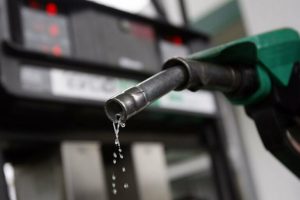
Nigerians, over the weekend, were thrown into confusion as the fuel pump price rose to between N980 and N1,300 while a Kilogram of Liquified Petroleum Gas(LPG) known as cooking gas also surged to between N1,050, to N1,400 across the country.
*BUSINESSDIARY* leant that the ongoing conflict between United States of America (US), Israel and Iran is mostly responsible for the fuel price hike in the international market as well as Nigeria.
Our correspndents across major States including Lagos, Ogun, Abuja, Port Harcourt, among other States had reported these hikes were ocassioned by scarcity of cooking gas which led to price surge and increased production cost that triggered fuel pump price increase.
For cooking gas, prior to now, it hovers between N850 to N1,000 per Kg but its now trading at N1, 400 in some gas stations. The gas retailers, our findings revealed, are currently out of stock while those who still have, were even selling higher.
In the petroleum market, the price was at a time at N739 per litre to N837 and later to N935 early last week and further to N985 to between N1, 300 as at yesterday.
While experts fear the crude oil byproducts may rise further if the crisis in the Middle East continues, Nigerians are apprehensive over expected multiplier effect in transportation cost starting from today, which may impact other services and prices of goods and foodstuffs.
On Saturday, 7th March 2026, Mobil cooking gas station at Jakande Roundabout, Lekki Phase 2, Lagos, sold 1kg of cooking gas at N1,050.00, while Technoil, KM 14 Lekki-Epe Expressway by Nicon Town Estate, Lekki, sold and still sells 1kg of cooking gas at N1,400.
Several other gas stations ran out of stock at the moment due to scarcity.
Findings from gas stations along the Meiran Road in Lagos and Ifo area of Ogun State revealed that, the price of Liquefied Petroleum Gas (LPG) has risen sharply within the last two weeks, placing additional pressure on households already struggling with rising living costs.
Checks by our correspondent showed that about two weeks ago, cooking gas was sold between N800 and N850 per kilogram in several retail outlets.
Further findings indicated that, while some stations currently display retail prices between N880 and N950 per kilogram, consumers eventually buy at higher rates ranging from N1,200 to N1,300 per kilogram.
Gas users and residents in the area expressed deep concern over the frequent fluctuations in prices, noting that the increase has occurred within the last five to seven days.
A resident, Mrs. Adeola Johnson, said the sudden hike has made it difficult for many households to cope.
According to her, “Just last week I refilled my gas at around N900 per kilogram, but when I returned a few days later, the price had jumped to over N1,200. It is becoming difficult for families to keep up with these constant increases.”
Another resident, Mr. Sadiq Lawal, said the price instability was frustrating for consumers.
He said, “The price keeps changing almost every week. Today, it is one amount, tomorrow it goes up again. Many people are now reducing how often they cook with gas.”
A customer at Technoil gas station named Olamilekun said he last refilled his cooking gas at the price of N1,050.00, but on Saturday, 7th March 2026, the price has now surpassed his budget and impacted how many kilograms he will be able to refill.
Operators of some gas stations attributed the increase to rising supply costs and market fluctuations.
One of the attendants at a gas plant along Meiran Road explained that, the higher retail price was largely influenced by the cost at which station owners purchase the product from suppliers.
“The price we sell depends on how much the gas is supplied to us. Recently the price from suppliers has increased, so stations have no choice but to adjust their selling price,” the attendant said.
Energy analysts have also linked the rising cost of cooking gas to supply challenges, foreign exchange pressures, and fluctuations in global energy prices.
They warned that unless supply improves and market stability is achieved, consumers may continue to experience periodic increases in the price of Liquefied Petroleum Gas across the country.
Global oil and gas prices have experienced a significant surge in early March 2026, driven by the escalating conflict between Iran, the United States, and Israel, which has disrupted supplies in the Middle East.
The instability, particularly around the critical Strait of Hormuz, has caused Brent crude to rise, creating upward pressure on petrol and diesel prices for consumers.
This development was affirmed by Dangote Refinery too while given reasons for fuel price increase.
The Dangote Petroleum Refinery said, the recent N100 increase in its petrol ex-depot price was driven by rising global crude oil prices and supply disruptions linked to geopolitical tensions in the Middle East.
The refinery attributed the price adjustment to rising global crude oil prices and supply disruptions in the international market caused by the war.
Since the war broke out, Brent crude oil prices have experienced significant increases and fluctuations following the closure of the Strait of Hormuz.
The Strait is the waterway through which about half of the world’s crude oil and condensates are exported. However, shipment and trucking of products have been halted due to the ongoing war across the Gulf countries

In Nigeria, the ex-depot price of LPG has also increased significantly. Reports show that the price rose to about N18 million per 20 metric tonnes, up from N15.95 million last week.
The national president of the Nigerian Association of Liquefied Petroleum Gas Marketers, Inyang Edu, confirmed the rise in prices.
“We are faced with limited supply in the international market due to the Iraq-Israel-American crisis, which has now triggered the price increase,” Edu said.
He added that , even though Nigeria produces some cooking gas locally, the country still depends partly on imports. As a result, global price changes quickly affect the local market.
“Even though we produce locally, including supplies from the Dangote Refinery, once prices rise in the international market, it affects domestic prices in naira,” he said.
The increase is expected to put more pressure on households and businesses already struggling with rising living costs.
Energy analysts warn that if the Middle East crisis continues, the price of cooking gas and other fuels in Nigeria could rise even further in the coming weeks.
A senior lecturer at Hussaini Adamu Polytechnic, Kazaure, Dr. Tijjani Ahmad, said, the recent increase in fuel prices in Nigeria is largely driven by global oil price changes, logistics challenges, and Nigeria’s past reliance on fuel imports.
Speaking, on the issue Ahmad said, oil prices often rise or fluctuate due to several factors affecting the global market and the cost of production.
According to him, one of the major reasons is the fluctuation in the price of crude oil at the international level
“Oil prices are increasing or fluctuating due to so many factors. For example, global oil price fluctuates whenever there is an increase in the price of crude oil in the global market,” he said.
He explained that, when the price of crude oil increases globally, it automatically affects the cost of producing fuel because crude oil is the main raw material used by refineries.
“So definitely this will affect the price of the crude, which is the input that is being used by refineries to produce the fuel. And whenever there is an increase in this input price, so definitely the output price, which is the fuel, will increase,” Ahmad added.
He said refineries can be affected by the cost of transporting crude oil as well as the expenses involved in processing it.
“Then secondly, we have the issue of logistics. So refineries are affected. They are affected by logistics, maybe in the supply of the crude oil or probably in the processing of the crude oil,” he explained.
“So whenever there are changes in the logistic cost or the changes in the cost of production within the refinery, this will definitely affect the fuel price,” he said
Similarly, , the Country director of The International Human Rights Commission – Relief Fund Trust (IHRC–RFT), Abdullahi Bakoji Adamu, has said the rising fuel prices in Nigeria has now become a human rights concern, warning that, the situation is affecting the livelihoods and welfare of ordinary citizens.
Adamu disclosed that the sharp increase in fuel prices is largely linked to disruptions in global oil supply caused by the ongoing conflict involving the United States, Israel and Iran.
According to him, tension in the Middle East has made movement through the Strait of Hormuz, one of the world’s most important oil routes, extremely risky for many oil shipments.
“The ongoing conflict involving the U.S., Israel and Iran has effectively blocked or made passage through the Strait of Hormuz, the main route for a large portion of the world’s crude oil, extremely risky,” he said.
Adamu noted that, the crisis has created uncertainty in the international oil market, forcing prices to rise sharply.
“From a security and human rights perspective, the sharp rise in fuel prices in Nigeria is being driven primarily by disruptions in global oil supply,” he said.
Before this crisis, oil was trading roughly between $30 and $60 per barrel, but with these supply risks, prices have surged to over $80 per barrel,” he stated.
The analyst also warned that if the conflict continues, oil prices could increase further.
“Projections suggest prices could reach between $90 and $100 per barrel if the situation persists,” he added.
Adamu pointed out that Nigeria is particularly affected because the country still imports a large portion of its refined fuel.
*Key Developments and Market Impact (as of March 2026):*
*Supply Disruptions:* Following attacks, QatarEnergy has halted some production, and oil and gas facilities in Saudi Arabia and Kuwait have faced disruptions.
*Strait of Hormuz:* The conflict has severely impacted shipping through the Strait of Hormuz—a crucial waterway for 20% of global oil and gas—with tankers attacked and warnings issued to vessels.
*Oil and Gas Prices:* Brent crude surged, with reports indicating it has crossed $90 a barrel, contributing to a 10% jump in oil prices and a 50% spike in gas prices upon initial escalation.
*UK Fuel Price Surge:* In the UK, average petrol prices have increased by nearly 2.5p a litre and diesel by over 3p, with diesel reaching 16-month highs.
*Refinery Price Hikes:* The Dangote Petroleum Refinery in Nigeria, for instance, increased its petrol price to N995 per litre due to rising crude costs linked to the conflict.
*Economic Forecasts:* The ongoing conflict threatens further global inflation, with fears that oil prices could exceed $100 a barrel if the crisis continues.
The situation remains volatile, with further price increases anticipated if the conflict escalates further.





