
RECAPITALISATION: Risk-Based Capital To Force Further Capital Upgrade For Banks
BY ZAKA KHALIQ
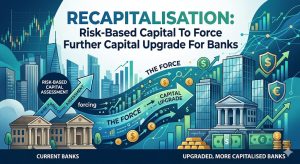
With the Central Bank of Nigeria(CBN) set to begin adoption of risk-based capital (RBC) in the banking sector post recapitalisation, more banks will be forced to further raised their capital, BUSINESSDIARY can now reveal.
The next phase post recapitalisation will ensure that banks who are exposed to major lending risks in Maritime, aviation, energy, among other sectors, would be asked to further consolidate their capital to meet their risk exposure.
Most of the banks involved in this next phase are those with international and national licenses who were already playing big in the earlier aforementioned sectors.
Currently, banks with international licenses are; Zenith Bank, Access Bank, First Bank, GTBank (GTCO), UBA,Fidelity Bank and FCMB.
Ecobank Nigeria, Stanbic IBTC, Sterling Bank, Wema Bank, Citibank Nigeria, Standard Chartered Nigeria, Globus Bank, PremiumTrust Bank, Providus Bank and NOVA Bank are now operating with National licenses.
Some of the aforementioned banks, it was gathered, would be affected by this development.
This measure, it was learnt, will ensure that banks can survive independently wthout relying on life support from the apex bank. Recall, CBN have been intervening in some banks believed to be systemically important, especially, those in Tier-1, from time to time to ensure they keep carrying out their civic responsibilities unhindered.
At the end of this capital consolidation, the apex bank, it was learnt, will lower its intervention mechanism in banks while it continues its supervisory roles to keep banks in check to ensure risk exposure could be accomodated in their respective capitalisatoon.
This, according to experts, may also mean an end to uniform recapitalisation in the banking industry as each bank will always be required from time to time to recapitalise in tune with riak exposure. In essence, recapitalisation will be treated going forward, on an individual basis.
Corroboraring this, the governor of the Central Bank of Nigeria (CBN), Olayemi Cardoso, at the Monetary Policy Forum held in Abuja on Thursday, noted that, the ongoing recapitalisation exercise is part of a broader set of reforms aimed at strengthening governance and risk management across the banking system.
He listed key measures to include the introduction of a risk-based capital framework, a phased exit from regulatory forbearance, stricter enforcement of insider lending rules, and restrictions on credit access for major non-performing obligors.
fhave risk of bad loans in their books and
According to him, supervisory capacity has also been upgraded through digital tools such as enhanced early warning systems and improved off-site surveillance, alongside stronger cross-border supervision of Nigerian banks operating internationally
He disclosed that 32 banks in Nigeria have already met the revised minimum capital requirements under the ongoing recapitalisation programme, marking a major milestone in efforts to strengthen the financial system.
He added that the progress reflects “commendable” industry compliance and positions the banking sector to better support long-term investment and economic growth.
He noted that the programme is central to building a more resilient financial system capable of driving Nigeria’s ambition of becoming a $1 trillion economy.

Speaking in an exclusive interview with *BUSINESSDIARY* on Sunday, a renowned Economist and Finance Analyst, Professor Tayo Bello, said, about 75% of the funds for this exercise were raised from domestic investors, while about 25% came from foreign ones.
According to him, “Now, aside from this capital base, it is stipulated that only paidup capital , share capital and premium, excluding retained earnings, that will be used. This brought about risk-based capital(RBC). That is, it’s a regulatory framework requiring banks to hold capital proportional to the risk of their assets.
“And not only that, both as loans and investments, to ensure stability and solvency. It is governed by what is known as BASEL.
That is, risk-to- capital adequacy ratio, usually about 8% of the proper credit and operational risk. ”
He is of the opinion that, with RBC, CBN is just subjecting banks to further tests in order to create sufficiency and maintain survival of the banks.
The objectives of RBC, he said, include,, financial stability so that their accounts can be solvent all the time which is risk management, adding that, this will enhance lending and investment behaviour by penalising risk-tier portfolios with higher capital loss.
Meanwhile, the Centre for the Promotion of Private Enterprise (CPPE) has flagged persistent weaknesses in Nigeria’s credit system, warning that, recent banking sector recapitalisation has yet to translate into meaningful lending to productive sectors of the economy.
In a policy brief signed by its Chief Executive Officer, Muda Yusuf, the think tank commended the Central Bank of Nigeria (CBN) for executing a smooth and orderly recapitalisation programme, but stressed that stronger bank balance sheets must now support real sector growth.
CPPE noted that financial intermediation remains weak, with private sector credit estimated at just 17 per cent of GDP in 2025, significantly below the sub-Saharan African average of 25 per cent and the 34 per cent benchmark for lower-middle-income economies.
The group highlighted structural imbalances in credit allocation, revealing that about 55 per cent of total lending is short-term, with maturities of less than one year, while long-term credit above three years accounts for only 25 per cent. It said this structure does not align with the financing needs of key sectors such as manufacturing, agriculture, infrastructure and real estate.
Consumer credit also remains underdeveloped, accounting for just 7 per cent of total lending, below the regional range of 15 to 25 per cent. Similarly, small and medium enterprises (SMEs) receive only 1 per cent of total bank credit, compared to a regional average of 5 per cent, despite contributing about 50 per cent of GDP and over 80 per cent of employment.
Sectoral distribution of credit further underscores the imbalance, with services accounting for 55 per cent of total lending, while manufacturing and agriculture receive just 14 per cent and 5 per cent respectively. These, CPPE says, are insufficient to drive industrialisation and economic diversification.
The think tank identified several structural barriers limiting credit flow to the real economy, including high government borrowing which crowds out private sector access to funds, tight monetary policy and elevated interest rates, as well as stringent collateral requirements that disproportionately affect SMEs.
It added that banks’ preference for short-term, low-risk investments continues to undermine long-term financing for capital-intensive sectors.
CPPE urged policymakers to shift focus from recapitalisation to strengthening financial intermediation, ensuring that credit is channelled more effectively into productive segments of the economy.





