
Nigeria’s Influence Grows In $10.5trn Annual Global Cybercrime Market
..…As ICT Stakeholders Advocate Data Centre Transformation In Nigeria, Africa
BY ZAKA KHALIQ
Nigeria’s influence is gradually growing in $10.5trillion global annual cybercrime cost with country now accounting for about 45 percent of reported cyberattacks in Africa.
Recall Nigeria ranked 14th among the top 20 countries with the highest number of cybercrime complaints submitted to the Internet Crime Complaint Center (IC3).
While the number of internet users have grown significantly in the last few years in Nigeria, the rate of cybercrime has also skyrockets ,a development that experts said, needs urgent attention.

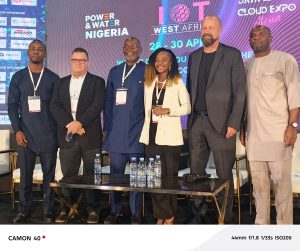
Similarly, stakeholders, who spoke at the at the IoT West Africa 2026 Conference in Victoria Island, Lagos, on Wednesday, advocated data centre transformation that will ensure Nigeria increases its influence in the technological world globally.
On his part, the national commissioner and chief executive officer of the Nigeria Data Protection Commission (NDPC), Vincent Olatunji, during his keynote address at the event, noted that, Nigeria is becoming an increasingly attractive target for cybercriminals due to its expanding digital ecosystem, growing internet penetration, and rising use of mobile and online services.

To him, “Cyber threats are rising globally, but Nigeria is particularly exposed. As we build our digital economy, we must also strengthen our defences.”
Nigeria, he said, experiences more than 4,000 cyberattacks every week, with financial losses exceeding N12 billion in 2024, largely from fraud, phishing scams, and ransomware incidents.
Globally, he said, cybercrime has reached alarming levels as attacks now occur every 39 seconds, with over one million complaints filed annually. The average cost of a data breach, he stressed, stands at about $14.88 million, while 85 percent of breaches involve personal identifiable information, making individuals and organisations highly vulnerable.

Stating that, phishing and social engineering are the most common threats in Africa, with a 32 percent victim rate, up from 26 percent the previous year, he added that, Ransomware accounts for about 35 percent of total financial losses, while identity theft and data breaches contribute roughly 25 percent of overall digital economy losses.
In addition, he pointed out that, more than 44,000 Distributed Denial-of-Service (DDoS) attacks are launched daily worldwide, targeting critical infrastructure such as banking systems, telecom networks, and government platforms.
“These attacks are no longer isolated incidents; they are systematic and coordinated. They disrupt services, steal sensitive data, and undermine trust in digital systems,” Olatunji said.
Olatunji stressed that, trust is the foundation of any digital economy, noting that, organisations with strong data protection systems report up to 80 percent improvement in user trust.
To address these risks, he said, Nigeria has strengthened its legal and regulatory framework with the enactment of the Data Protection Act in 2023, followed by implementation guidelines in 2025.
The NDPC now requires organisations to adopt strict compliance measures, including data protection audits, appointment of data protection officers, and mandatory reporting of breaches within 72 hours, he assured.
Failure to comply can lead to heavy penalties, including fines and up to one year imprisonment. Data sovereignty is critical. If our data is not within our control, our ability to protect it is limited,” Olatunji said.
Olatunji called for increased investment in local data infrastructure, including data centres, as well as stronger collaboration between government and the private sector.
Similarly, Investment Principal, African Infrastructure Investment Managers(AIIM),
Mr. Akinsehinwa Akin-Taylor, while speaking during the Fire Chat on ‘Role Of Collocation In Enabling Africa’s Data Centre Transformation: Opportunities and Challenges, urged players in the Information Communication Technology(ICT) Sector to partner and collocate in a move to enhance efficiency in service delivery, reduce operating costs, thereby, transforming African data centres to some of the best globally.
Moreover, the chief executive officer of Rack Centre, Mr. Lar Johannisonson, noted that,
Africa has what it takes to comepete globally, leveraging on its huge population, especially, with Nigeria leading this and a developing market that has pontentials to outgrow other continents when its opportunities are explored to the fullest.
Meanwhile, the managing director of Equinix, Mr. Wole Abu said, though low internet penetration in some African countries is a major barrier, he called for more establishment of data centres, especially, in the hinterland acoras Africa to continue to increase Africa’s imprint in digital economy globally.
Other experts, who spoke at the event warned that, without strong cybersecurity and data protection measures, Nigeria risks losing both economic value and public confidence.
Therefore, stakeholders present at the event agreed there is the need for a wholestic data centres transformation in the face of the global realities and to move at the same pace with developed countries who have axcelled in the use of big data and digital penetration to transform their economies





