
Nigeria Crumbles Under Insecurity, Loses Trillions of Naira Investments
…As Experts Advocate Massive Security Investments
BY CEES HARMON
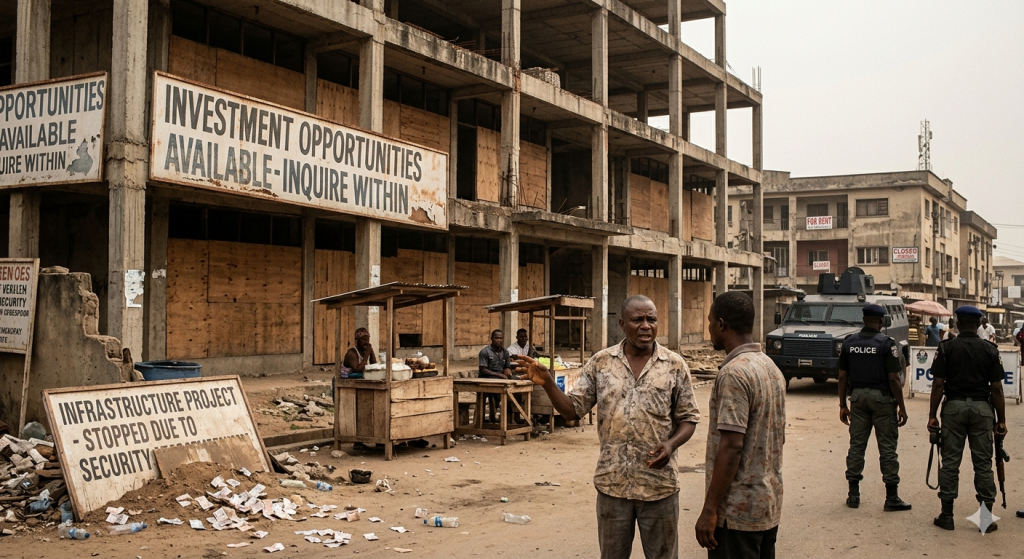
Nigeria’s worsening insecurity is imposing enormous economic and social costs on the country, with analysts estimating that banditry, terrorism, kidnapping, communal conflicts, and farmer-herder clashes have cost the economy trillions of naira in lost investments, disrupted agricultural production, weakened business confidence, and deepened poverty across several regions.
Security experts, economists, and policy analysts say that while insecurity remains one of Nigeria’s biggest development challenges, ending the crisis would require sustained investments running into trillions of naira in security infrastructure, intelligence gathering, military modernisation, job creation, and social development programmes.
According to the Institute for Economics and Peace, the economic impact of violence on Nigeria has consistently ranked among the highest in Africa, with losses running into billions of dollars annually through destruction of property, reduced productivity, healthcare costs, and security expenditures.
Data from the National Bureau of Statistics showed that Nigerian households paid hundreds of billions of naira as ransom between 2023 and 2024, while thousands of citizens were affected by kidnapping incidents across different parts of the country.
The agricultural sector has been among the hardest hit. Insecurity in parts of northern Nigeria has forced many farmers to abandon farmlands, contributing to lower food production and rising food inflation.
The Ex- president of the All Farmers Association of Nigeria, Kabir Ibrahim, said insecurity had significantly disrupted farming activities.
“Many farmers can no longer access their farms safely. When agricultural production declines, food prices rise, rural incomes fall, and the entire economy suffers,” he said.
Economic analysts said insecurity has also discouraged foreign and domestic investment, particularly in sectors such as agriculture, mining, tourism, manufacturing, and transportation.
Chief Executive Officer of Centre for the Promotion of Private Enterprise, Dr. Muda Yusuf, said the security situation had become a major economic constraint.
“Insecurity raises the cost of doing business, increases logistics expenses, discourages investment, and reduces productivity. Investors naturally prefer environments where lives and assets are protected,” he said.
Beyond the economic impact, social experts warned that insecurity has created widespread humanitarian consequences, including displacement, school closures, psychological trauma, and worsening poverty.

According to humanitarian agencies, millions of Nigerians have been displaced by conflicts and insurgency, particularly in the North-East and parts of the North-West.
A development economist at Adeleke University, Professor Tayo Bello, said the long-term social costs could be even more damaging than the direct financial losses.
“When children are unable to attend school, communities are displaced, and livelihoods are destroyed, the effects can last for decades. Insecurity is not only a security problem; it is a development crisis,” he said.
Experts estimate that significantly reducing insecurity would require major investments in intelligence systems, surveillance technology, military equipment, police reform, border security, judicial efficiency, education, and youth employment programmes.
A retired military officer and security analyst, who pleaded anonymity, said solving insecurity would involve more than military operations alone.
“You cannot end insecurity through force alone. Government must invest heavily in intelligence, policing, technology, economic opportunities, and community engagement. The total cost could run into several trillions of naira over multiple years,” he said.
Analysts noted that Nigeria’s defence and security budgets have risen steadily over the years, with additional supplementary appropriations frequently approved to support military and security operations.
However, they argued that addressing the root causes of insecurity, including unemployment, poverty, weak institutions, and poor governance, would require broader socio-economic investments beyond conventional security spending.
A security researcher at Centre for Democracy and Development, Dr. Rukayat Bello, said sustainable peace depended on both security reforms and economic inclusion.
“Security expenditure is necessary, but long-term stability requires investments in education, job creation, social protection, and justice systems. Communities must see tangible economic opportunities,” she said.
Business leaders have also called for stronger collaboration between federal and state governments, security agencies, traditional institutions, and local communities to improve intelligence gathering and conflict prevention.
Despite recent improvements in some regions, analysts warned that the economic burden of insecurity could continue to slow growth, worsen inflation, and undermine development goals if decisive action is not taken.
They maintained that while ending insecurity would require substantial financial commitments, the long-term economic benefits, including increased investment, agricultural productivity, employment creation, and social stability would far outweigh the costs.





