Maiden Ceramic Exhibition Opens Investment Opportunities In Nigeria
BY CANICE OPARA
The Nigeria Ceramic Investment Summit and Production Exhibition (NCISPE), at its maiden conference, explored investment opportunities for investors in the industry to take advantage of.
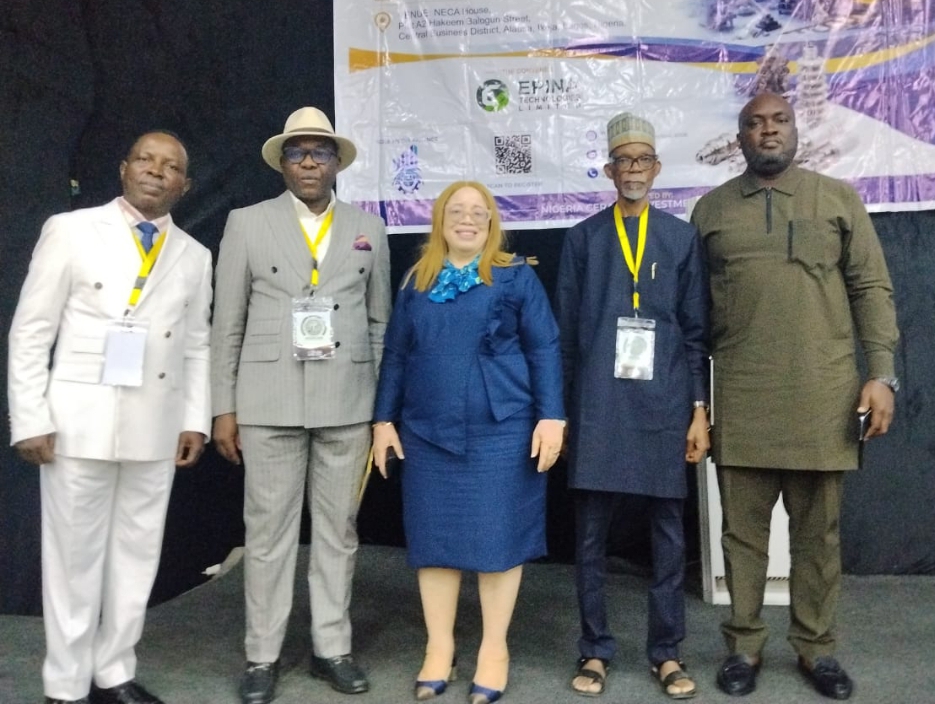
The event, which held at NECA House, Lagos, gathered industry experts and investors from Nigeria and beyond to brainstorm and explore the hidden potential of the solid minerals.
While delivering his keynote address, Prof. Eguakhide Patrick Oaikhinan, Professor of Ceramic Engineering and CEO of Epina Technologies Limited, and convener of the event, revealed that, Nigeria’s ceramic industry if properly tapped, will be one of Africa’s most compelling industrial investment opportunities.
Speaking further, Prof. Oaikhinan said, Nigeria’s Ceramic Industry is a sector ready to transform Nigeria and Africa from heavy import dependence to a regional manufacturing powerhouse, because according to him, the global ceramic industry is currently valued between $250 and $360 billion, and is projected to exceed $435 billion by 2033, which Nigeria and Africa in general can easily tap into its vast resources.
While speaking to the stakeholders at the event, Prof. Oaikhinan enumerated Nigeria’s Natural Resource Advantage to include substantial deposits of Kaolin, Feldspar, Quartz, Silica Sand, Ball Clay, Talc, and Bentonite.
“Most ceramic minerals occur in commercially viable quantities suitable for industrial development,” he said.
He went ahead to point out that over 2 billion metric tons of high-grade kaolin is spread across the North-West, North-Central, South-West, and South-East zones of Nigeria.
Prof. Oaikhinan specifically detailed the geographical spread of other vital materials in the country, such as the major feldspar deposits in Kogi, Ogun, and Ekiti states, and the extensive silica reserves found in the coastal regions of Lagos, Delta, and Ondo.
He highlighted how investment in this direction will bridge the gap in Housing Deficit in the country with a population exceeding 230 million and a rapidly growing middle class, hence building ceramics, including floor, wall, and roofing tiles come handy.
“Nigeria faces a housing deficit estimated in the millions of units, creating sustained demand for ceramic products,” Oaikhinan stated.
He added that, urban expansion and infrastructure projects like hospitals, schools, and airports are further accelerating the need for local production.
With regards to import substitution and economic growth, he said the country can produce locally what it currently imports, as part of what it imports range from tableware, sanitary wares, electrical insulators and technical ceramic.
Prof. Oaikhinan stated the economic benefits of local production to include foreign exchange savings, local job creation, technology transfer, and an improved trade balance.

At the end, Nigeria will not be a consumer, but as “West Africa’s leading ceramic manufacturing and export hub,” as the African Continental Free Trade Area (AfCFTA) will give her access to a market of 1.4 billion consumers.
He therefore, emphasised that for the industry to thrive, “Investment Enablers” must be in place, including government support, tax incentives, and international partnerships with nations such as Italy, China, India, and Türkiye for technology transfer and joint ventures.
Prof. Oaikhinan explained that, “Our vision is a globally competitive ceramic industry that drives sustainable industrialisation and improves quality of life”.
He stressed that, the sector’s growth would lead to significant social contributions, including youth employment and women entrepreneurship, that with the right alignment of resource availability, industrial policy, and private sector leadership, Nigeria’s ceramic industry is no longer just a possibility; it is an inevitability.
Stakeholders from the manufacturing, real estate, construction and banking sectors etc, who graced the occasion, one after the other made their inputs to the conversation.
For Dr. Niyi Adeleye, Founder/CEO Perfection Real Estate Group, who spoke on “driving affordable housing through local ceramic manufacturing, a real estate developer’s perspective”, he noted that ceramics are more than decorative finishes, that they influence project value and buyer experience, while for Nigeria, the sector supports local content, import substitution, jobs, skills and diversification.
Adeleye therefore, advised government, developers, and investors to create the right environment, like providing energy support, clusters, raw materials, roads, incentives etc,.
Speaking on “Unlocking growth in Nigeria’s eramics sector through inclusive banking”, Ugochi Osinigwe, Divisional Head, SME Banking, started that SMEs face two distinct sets of challenges, which include non-funding issues from structural/business management capacity, as well as funding issues linked to access to finance.
Osinigwe identified government policies as the most powerful force shaping the sector, and suggested the need to bar the government agencies from procuring foreign goods that can be made locally — a potential public-sector demand boost for local ceramics.
She listed the classic 5 Cs of credit — what a ceramic SME must show to the bank, especially Fidelity Bank to include: Character, Capacity, Capital, Conditions and Collateral, stressing that no financier will fund a business with sub-optimal structures.
To the stakeholders, the sector will immensely contribute to Nigeria’s industrial transformation agenda, as it will create opportunities for small and medium-scale enterprises across the value chain.
They slso urged the federal government to make policies that support investors, provide infrastructure, and incentives required to unlock the vast potential of the ceramic industry, while expressing confidence that with the right investment and regulatory framework, Nigeria’s ceramic manufacturing hub, leveraging its abundant natural resources, will thrive and sustain economic development.