
FITC, Stakeholders Advocate Bold Leadership, Climate Action To Build Sustainable Africa
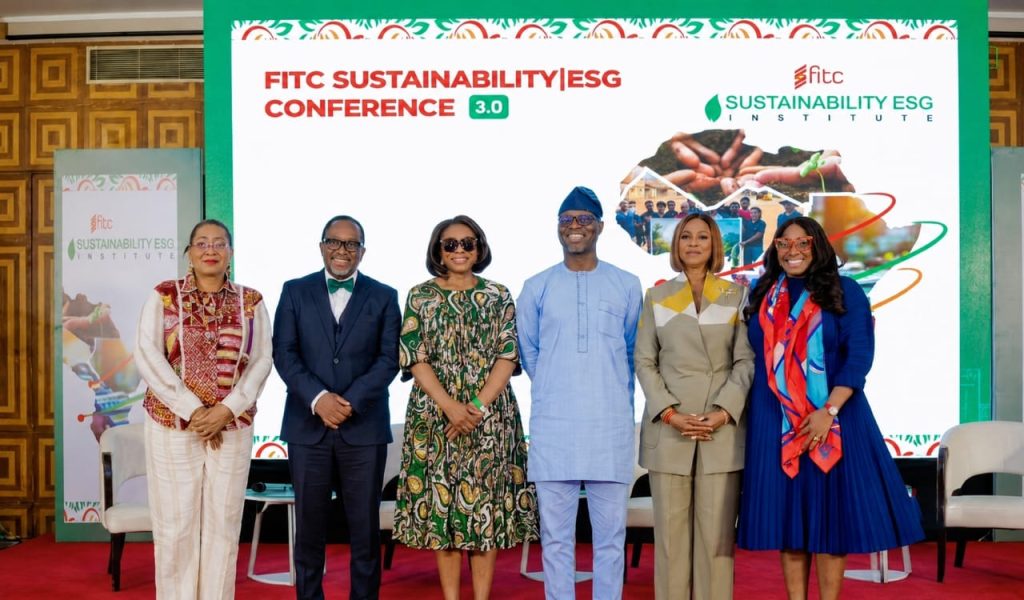
An innovation-led professional services institute in Nigeria, FITC, through its recently concluded conference, alongside relevant stakeholders, are advocating bold leadership climate action to build sustainable Africa.
To this end, the urgent need for Africa to transform sustainability commitments into measurable action, took centre stage as business leaders, policymakers, regulators, investors, development finance institutions, academics and sustainability practitioners converged at the FITC Sustainability & ESG Conference 2026 to discuss the issue.
FITC, while reaffirming that Sustainability and Environmental, Social and Governance (ESG) principles are no longer optional corporate initiatives, it added that, it has become strategic imperatives for building resilient economies, trusted institutions and shared prosperity across the African continent.
Convened by FITC under the theme, ‘Building a Sustainable Africa: Integrating Environmental Stewardship, Social Impact, and Strong Governance for a Prosperous Future,’ the conference brought together an exceptional assembly of public and private sector leaders to examine how Africa can leverage Sustainability and ESG as catalysts for economic transformation, investment attractiveness, institutional resilience and inclusive development.
Welcoming participants, managing director/chief executive officer, FITC and the Convener, FITC Sustainability & ESG Conference, Dr. Chizor Malize, described the gathering as more than an annual conference. She said, it represented a strategic platform for shaping Africa’s sustainability agenda at a time when climate change, social inequality, governance expectations and shifting investment priorities are redefining the global economy.
She noted that “Sustainability and ESG have evolved from corporate responsibility nitiatives to strategic drivers of competitiveness, resilience and long-term value creation.’
According to her, organisations and nations that successfully integrate environmental stewardship, social investment and strong governance into their decision-making will be better positioned to attract investment, manage risk, strengthen institutions and create sustainable prosperity.
Dr. Malize challenged leaders across government, business, finance and development institutions to move beyond dialogue towards practical implementation. According to her, “Africa’s future will be determined not by the magnitude of its challenges but by the quality of leadership and the decisions made today”.
She reaffirmed FITC’s commitment to serving as a leading platform for thought leadership, executive capacity development and cross-sector collaboration in advancing Africa’s Sustainability and ESG agenda.

Delivering the opening address, chairman of the Advisory Board of the FITC Sustainability & ESG Institute, Professor Fabian Ajogwu,, called for urgent and coordinated climate action, describing environmental stewardship as one of the defining leadership responsibilities of this generation.
He observed that climate change is no longer solely an environmental concern but a strategic economic issue with profound implications for businesses, governments and societies. According to him, leaders must embed sustainability into corporate strategy, institutional governance and national development planning.
He emphasised that, ‘protecting Africa’s natural capital is fundamental to securing longterm economic resilience and prosperity.’
Representing the deputy governor of the Central Bank of Nigeria(CBN) on Economic Policy,, Mr. Philip Ikeazor, Mr. Mike Ononugbo highlighted the critical role of sustainable finance in accelerating Africa’s transition to a low-carbon and climate-resilient economy.
He described environmental stewardship as essential for protecting Africa’s natural resources while sustaining economic growth across the continent.
In his remark, “initiatives such as the Africa Carbon Market Initiative and the Green Climate Fund, can bridge the significant financing gaps that continue to constrain Africa’s climate ambitions.”
According to him “green finance provides an important mechanism for directing investment towards renewable energy, climate-resilient infrastructure, low-carbon technologies and environmentally sustainable enterprises. ” He identified green bonds, sustainability-linked loans and green equity as critical financial instruments capable of mobilising the capital required to accelerate Africa’s green transition and strengthen long-term economic resilience.
A key intellectual centerpiece of the Conference was the keynote address delivered by the chairman of the MTN Foundation, Mrs. Mosun Belo-Olusoga, who challenged leaders to reposition Sustainability and ESG as Africa’s blueprint for long-term prosperity.
She observed that the continent’s future competitiveness will depend not merely on its natural resources but on the strength of its institutions, the quality of its leadership and its ability to create lasting value for people, communities and future generations.
She called for a new leadership paradigm anchored on integrity, accountability, innovation and long-term thinking, emphasising that, organisations embracing Sustainability and ESG as strategic disciplines will be better positioned to attract investment, build trust and remain competitive in a rapidly changing global economy.
According to Mrs. Belo-Olusoga; “Africa’s youthful population, entrepreneurial energy, natural resource endowment and growing digital economy present an unprecedented opportunity to build an inclusive and sustainable growth model capable of delivering prosperity for all. ”
Delivering a special address, , the director-general of the Securities and Exchange Commission (SEC), Dr. Emomotimi Agama, underscored the growing importance of sustainability disclosures in today’s investment environment. He warned that, Nigerian companies that fail to strengthen their Environmental, Social and Governance disclosures risk missing significant global capital flows as investors increasingly prioritise transparency, responsible governance and sustainable business practices.
A major highlight of the conference was the flagship Titan Plenary themed, ‘From Commitment to Action: Building a Sustainable Africa Through Leadership, Investment and Accountability. The plenary featured Sustainability and Governance.





