State Police: N5trn Costs, Governors’ Powers Raise Fresh Security Fears
BY CEES HARMON and ADEYEMI OBADIMU
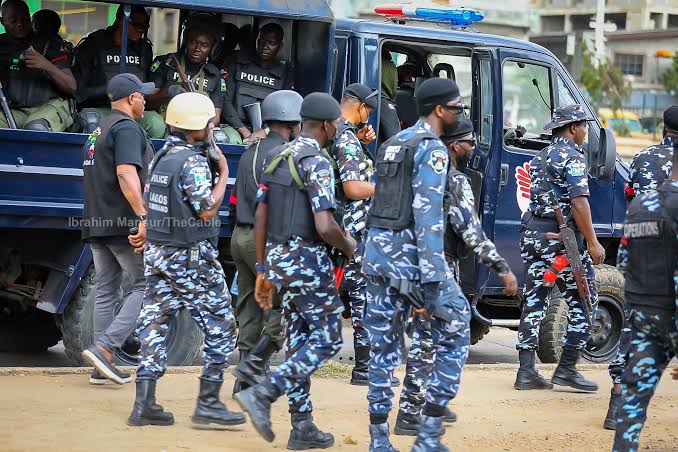
Nigeria’s proposed state police system is emerging as a major test of the country’s security architecture, with an estimated N5 trillion implementation cost, fears of political abuse and concerns over the financial capacity of states threatening to undermine its anticipated benefits, BUSINESSDIARY learnt.
Although the proposed reform promises improved intelligence gathering, faster response to crime, employment generation and a safer business environment, analysts warn that, weak institutional safeguards, funding disparities and governors’ control could turn decentralised policing into another instrument of political intimidation.
The proposal has gained significant legislative momentum following unanimous approval by all 36 State Houses of Assembly. The Senate, on November 18, directed the Clerk of the National Assembly to transmit the constitutional amendment to President Bola Tinubu for assent.
The upper chamber also urged the Federal Government to forward the National Policing Bill to the National Assembly to establish the operational framework for the proposed state police services.
The development marks a major departure from Nigeria’s centralised policing structure, under which the Federal Government exercises primary control over the Nigeria Police Force.
However, the critical question is whether states can finance, manage and regulate their own police institutions without compromising professionalism, citizens’ rights and national security.
SECURITY GAINS: CLOSER TO COMMUNITIES
Supporters of state policing argue that bringing law enforcement closer to communities will strengthen intelligence gathering, improve crime prevention and enable faster responses to security threats.
Security commentator, Ayo Adesina, said decentralised policing would allow security operatives to work more closely with residents who understand the terrain, criminal networks and peculiar security challenges within their communities.
According to him, local intelligence could help security agencies identify suspicious activities, track criminal movements and develop interventions suited to the realities of individual communities.
He noted that, the arrangement could particularly benefit areas battling kidnapping, banditry, cultism, communal violence and armed robbery.
Adesina argued that States would also be better positioned to deploy personnel and resources according to their security priorities rather than depend entirely on a central command structure responding to competing demands across the federation.
The urgency of the proposed reform is underscored by Nigeria’s worsening insecurity.
Data from the Armed Conflict Location and Event Data project (ACLED) show that kidnapping incidents increased sharply in 2025 compared with 2024, while mass kidnappings involving more than 10 people averaged at least 100 incidents quarterly during 2025.
Although the frequency declined in 2026, ACLED warned that mass kidnappings remained above pre-2025 levels. Zamfara accounted for 12.3 per cent of recorded abduction incidents nationwide in 2026, while Niger State accounted for 6.4 per cent.
Public perception also highlights the depth of Nigeria’s security crisis.
An Afrobarometer survey of 1,600 Nigerian adults, conducted between March 5 and 31, 2022, found that 77 per cent considered Nigeria unsafe to live in. Sixty-one per cent had felt unsafe walking in their neighbourhoods, while 51 per cent feared crime in their homes during the preceding year.
More revealingly, only 17 per cent said they would approach the police first when confronted with security concerns. Thirty per cent preferred community or traditional leaders, while 18 per cent turned to neighbourhood security organisations.
The survey exposed a major confidence deficit in formal policing, with only 15 per cent expressing some or considerable trust in the police, while 73 per cent believed most or all police officers were corrupt.
These findings suggest that State policing must deliver more than geographical proximity. It must rebuild public confidence through professionalism, accountability and respect for citizens’ rights.
N5TRN FUNDING CHALLENGE
Perhaps the biggest obstacle to the proposed reform is the financial burden of establishing and sustaining police organisations across the 36 states.
An analyst at SBM Intelligence, Ayomide Akinwale, argued that only about four States could realistically finance their policing services without substantial dependence on federal allocations.
He cited estimates from a police reform committee, suggesting that, nationwide implementation could cost more than N5 trillion over five years, covering recruitment, infrastructure, training, equipment and operations.
The financial implications are significant, considering the competing demands on state budgets.
State governments will have to provide for officers’ salaries, allowances, pensions, training, operational vehicles, communication systems, police stations, forensic facilities and other security infrastructure.
The 2026 budget allocated approximately N1.33 trillion to the Ministry of Police Affairs, comprising N1.268 trillion in recurrent expenditure and N60.9 billion in capital expenditure. The Nigeria Police Trust Fund also received an allocation of approximately N233.96 billion.
Establishing another layer of policing across the states could significantly increase the country’s overall security expenditure, depending on the eventual division of responsibilities between federal and state authorities.
Director of Quartus Economics, David Adeoye, highlighted the growing fiscal responsibilities of subnational governments, noting that, State governments accounted for approximately 76.7 per cent of federation capital expenditure in 2025.

The implication is that states already carry substantial responsibility for capital investment and service delivery, making additional security expenditure a potential source of pressure on their finances.
World Bank Senior Country Economist, Gloria Joseph-Raji, has similarly warned that increased state revenues must translate into measurable improvements in public services through stronger financial management and expenditure controls.
The concern is that funding state police could divert resources from critical sectors such as education, healthcare, infrastructure and social protection.
WEALTHY STATES, BETTER POLICE?
Beyond the overall cost, disparities in the revenue-generating capacity of states could produce unequal standards of policing.
A financial economist at CashLinks in Lagos, Moses Ojake, warned that wealthier states such as Lagos, Rivers and Delta could establish better-equipped police services than states with weaker revenue bases.
He said the disparity could make the quality of security available to Nigerians dependent on the financial strength of their respective States.
Such an outcome could create a situation where residents of economically stronger states enjoy better-funded security services, while poorer states struggle with inadequate personnel, equipment and operational infrastructure.
A July 2026 analysis by the Foundation for Investigative Journalism examining five years of funding for existing state-backed security organisations provides an indication of the challenge.
The investigation examined organisations including the Lagos Neighbourhood Safety Corps, Amotekun in Ondo, Kano Vigilante Group and security outfits in Gombe, Imo and Ebonyi. In Lagos, nearly N9 billion was allocated to the Neighbourhood Safety Corps in 2021, but actual spending stood at approximately N6.2 billion. Of the N2.4 billion earmarked for capital projects, only N676 million was disbursed.
The findings demonstrate that budgetary allocations do not automatically translate into operational capacity, raising questions about how effectively state governments will manage much larger police budgets.
GOVERNORS’ CONTROL RAISES ABUSE FEARS
While funding remains a major concern, the possibility of political interference presents another serious threat to the proposed reform.
Adesina warned that governors could exploit their influence over state police structures to intimidate political opponents, settle personal scores and persecute individuals perceived as threats to their political interests.
He also expressed concern that influential businessmen and other powerful individuals could manipulate state police personnel to pursue private disagreements and victimise innocent citizens.
Without effective checks and balances, he warned, decentralised policing could encourage wrongful arrests, selective enforcement of the law and abuse of police powers.
He therefore called for independent oversight, transparent recruitment, professional discipline and effective judicial safeguards to prevent political capture.
Although the approved framework provides oversight mechanisms, including the involvement of the National Police Council in certain matters and procedures for resolving disagreements involving state police leadership and governors, their effectiveness will ultimately depend on implementation.
For some Nigerians, the concern goes beyond political interference to the possibility of collusion between security personnel and non-state actors.
A resident of Maryland, Lagos State, Simon Iyase, expressed reservations about entrusting additional policing powers to state institutions when some existing security personnel allegedly collude with criminal elements.
He cited instances of police officers allegedly collaborating with or condoning the extortion of motorists by street gangs in parts of Lagos.
“These activities are as clear as daylight on our streets. How can we then mortgage our security with such people?” he asked.
His concern highlights the need to address corruption and complicity within existing security structures before expanding policing powers to the States.
JOBS, INVESTMENT AND ECONOMIC OPPORTUNITIES
Despite the financial and institutional risks, state policing could generate significant economic opportunities if properly implemented.
Financial economist at Auchi Polytechnic, Zakari Mohammed, said the proposed arrangement could create employment through the recruitment of police officers, investigators, intelligence personnel, forensic specialists, communication experts and administrative workers.
He also identified opportunities for local manufacturers and technology companies supplying security equipment, uniforms, vehicles, communication devices and surveillance technology.
More importantly, Mohammed argued that improved security could stimulate investment by reducing the risks and costs associated with operating businesses in crime-prone communities.
Manufacturers, farmers, transport operators and other businesses could benefit from safer operating environments, improved movement of goods and reduced expenditure on private security.
Nigeria’s insecurity has contributed to disruptions in agricultural activities, displacement of communities, restrictions on movement and increased operating costs for businesses.
A more responsive policing system could help reverse some of these losses by protecting economic activities, strengthening rural security and improving investor confidence.
However, these benefits will depend on whether state police organisations can operate professionally, remain independent of partisan interests and coordinate effectively with federal security agencies.
Ultimately, Nigeria’s state police experiment will be judged not by the number of officers recruited or billions committed, but by its ability to reduce crime, protect citizens, strengthen public trust and deliver measurable economic benefits without creating another costly and politically vulnerable institution.