
Ongoing Banking Recapitalisation Will Lower Trump’s Tarrif Policies’ Impacts On Nigeria, Says Experts
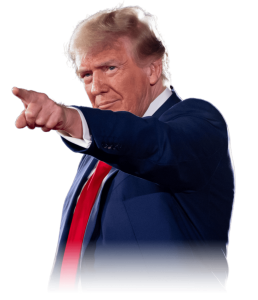
The ongoing recapitalisation exercise in the Nigerian banking sector is expected to lower the impact of the recent tarrif hike on imported commodities into the United States of America(USA) by the president, Donald Trump recently.
And just as the April 2026 banking recapitalisation deadline gets closer, Chief Economic Strategist at ECOWAS Commission, Professor Ken Ife said, the exercise will help the country brace up for the economic meltdown that is set to hit the global community with the wave of tariffs and trade war prompted by the United States of America President, Donald Trump.
Speaking at the 36 Seminar for Finance Correspondents organised by the Central Bank of Nigeria (CBN) in Abuja yesterday, Professor Ife stressed the need for economies to brace up for the potential economic ‘tsunami’ that will be triggered by the trade policies of US President Donald Trump.
He cautioned that the global economy, and Nigeria in particular, may face significant headwinds akin to those experienced during the Great Depression.
Expressing deep concern over Trump’s renewed commitment to aggressive tariff policies, he warned that, such protectionist measures are reminiscent of the 1930s Smoot-Hawley Tariff Act, which many historians believe worsened the global economic downturn.
“Trump is seeking to return to an era when tariffs were a primary source of US government revenue,” he said, adding that, recent rulings by the US Supreme Court have seemingly strengthened the president’s unilateral authority on trade matters.
“These high tariff walls may promote inefficiency, stifle innovation and competitiveness, and drive governments into costly subsidy schemes. Ultimately, these policies could result in widespread job losses in both the export and import sectors—not only in the US but also among its trade partners,” he stressed.
He also flagged concerns over the devaluation of the Chinese Yuan, which could lead to an influx of cheaper Chinese imports. This, he argued, may increase demand for scarce foreign currency in Nigeria, further draining dollar reserves.
Compounding the situation is the projected decline in global oil prices, possibly down to $55 per barrel—a scenario that may weaken Nigeria’s excess crude account and overall reserve position, he noted.
“The combination of trade disruption, currency volatility, and softening oil prices could affect Nigeria’s economy. We are looking at structural risks that require urgent policy intervention. We must learn from the economic missteps of the 1930s. Protectionism did not work then, and it won’t work now. Nigeria must prepare strategically to weather the gathering global storm, ” he pointed out.
He noted that, the current international trading system, shaped the aftermath of the Second World War to reduce tariffs and foster economic cooperation, had significantly expanded global trade.
The United States has been a chief beneficiary of this architecture, accounting for a substantial share of world trade despite representing a small fraction of the global population. Importantly, Professor Ife highlighted that much of US trade advantage lies in services, not goods—a nuance , he believes, is being overlooked in today’s tariff discourse.
On the financial front, Professor Ife observed a growing shift away from US dollar dominance. The dollar remains the world’s leading reserve currency, its grip is gradually loosening, he said, pointing to the IMF’s 2018 decision to include additional currencies—such as the Chinese Yuan—in its Special Drawing Rights basket as a catalyst.
Similarly, the director, Banking Supervision department, the Central Bank of Nigeria(CBN), Dr. Olubukola Akinniyi Akinwumi, assured that, banks have progressed remarkably in the ongoing recapitalisation exercise, as they are within the Prudential threshold it had earlier set.
To him, “Banks are within the prudential threshold we have set, even though, as they continue their recapitalisation route. Already, there are one or two new entrance either in the core banking or non-interest banking. So, the banks have made considerable progress in this exercise.”
He is optimistic that the capital requirement that has been stipulated in this exercise will absorb emerging challenges, even as the apex is observing the current U.S Tariff policies and it’s impact with the intention to intervene when the need arises.
Meanwhile, the CBN deputy governor, Corporate Servicies, Ms Emem Usoro noted that, the push for recapitalisation of banks will no doubt improve the strength and health of the financial system, deepen financial intimidation and promote healthier competition that will strengthen our payment system.
Noting that the global financial system and architecture have assumed a new dimension even before the new administration of Donald Trump in the United States of America, she said, globalization has broken the limit of financial flus and investors have inadvertently taken full advantage of the opportunities.
However, countries and their financial systems have been prepared and ready to utilize opportunities created by financial globalization through appropriate policy support and actions, Usoro stated.
Usoro, who was represented by the acting director ,Corporate Communications, Mrs Hakama Sidi-Ali, noted that, the Nigerian banking system has undergone reforms, including bank recapitalisation and consolidation that brought the number of banks in the country from 89 to 25 as the apex bank implemented policies in line with the emerging developments at that time.
“As we work towards building a $1 trillion economy, we must consider the organisation of our banks to be able to fund finance and power the economy and favorably compete with its peers globally, we should particularly pay significant attention to bank recapitalisation to ensure that our banks are strong, resilient and stable enough to carry out financial intermediation and the much needed financings of development projects and programmes.
“Building a $1 trillion economy is not an easy task. It should require careful planning, robust and clear policy direction, beautiful implementation and avert commitment to stakeholders that will organize the various sectors of the economy. Today, our economy is valued at approximately $250 billion and as we aspire to build a $1 trillion economy, all hands must be on deck to achieve this,” he stressed





