
Enough is Enough Nigeria, Others Charge Nigerians To Speak Up Against Bad Governance
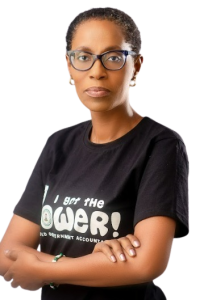
“When you are going through a challenge whether as an individual or a community, the solutions lies in you speaking up. When you speak continuously, those concerned would hear and begin to address it,” she said.
She stated rhat, Enough is Enough (EiE) Nigeria was set up as the next step from two citizens’ protests in 2010 ‘on our missing President, Late Musa Yar’adua,’ killings in Jos & fuel scarcity – March 16 protest to the National Assembly & April 13 protest to the Lagos State Governor.
Based on the mobilisation done for the protests, she said, EIE Nigeria started as a loose network of individuals and organisations committed to changing the dynamics of accountability to citizens by public officials.
“The protests were organised primarily via email, SMS, Twitter, Blackberry Messenger and Facebook. It was the beginning of what would be EiE’s heavy reliance on technology as a tool of education, engagement and mobilisation, ” she said.
Speaking virtually, the director general, World Trade Organisation(WTO), Dr. Ngozi Okonjo-Iweala, applauded the network for mobilising Nigerians on the right course, its radio programme that gives voice to the voiceless, school initiative, among others.

Stating that, ‘no external body can come and develop our country for us, except we take up the initiative ourselves, ‘ she said, the onus of developing Nigeria is a collective responsibility from both the leaders and the governed .

She urged people to find their voices and clamour for Nigeria they truly deserve. “People should continue to lend their voices until the situation change and see the Nigeria we dreamt of, ” she pointed out.
Similarly, Catholic Bishop for the Sokoto Diocese, Dr. Matthew Hassan Kukah, who also spoke virtually, thanked EIE Nigeria for the courage, determination and sacrifice irrespective of the stumbling block. obstructing its course.
The 16th Emir of Kano and former governor of the Central Bank of Nigeria(CBN) , Sanusi Lamido Sanusi, at the event, accused the elite of undermining national development by treating public office as a personal and family enterprise rather than a platform for public service.
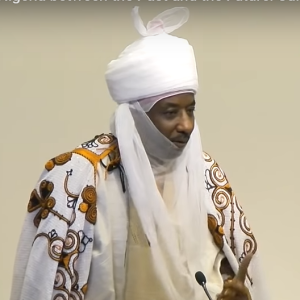
The nation, he said, continues to miss critical opportunities for progress because those in power prioritise themselves and their inner circles over the welfare of citizens.
“The reason we miss these opportunities is that we have people who think public office is about themselves, it’s about their families, it’s about people close to them, it’s not about the country. But public office is about the citizens, ” he pointed out.
Calling on young Nigerians to challenge the country’s prevailing dysfunction and work collectively to build a nation that reflects its true potential, he noted that, the current system is sustained by ethnic rivalries, religious tensions, and personal interests that have derailed national unity and development.
To him, “the important thing for me is that as citizens, every one of us should remember that the nation belongs to us. It does not belong to the government, it does not belong to politicians, it belongs to us.
“We own this country, and wherever we find ourselves, we must remember that we are holding one small part of Nigeria and we have a duty to do what we must, to contribute our own quota to this country.”
He advised young Nigerians to unite around a shared ideological direction and articulate a clear vision for the type of Nigeria they want to build.
Enough is Enough (EiE) Nigeria is a network of people changing the dynamics of accountability to citizens by public officials.
To this end, the group recently celebrated its 15th anniversary at an event held in Lagos recently, where it premiered a mini documentary showcasing three eras of Nigeria’s active citizenship movements as well as the launch of the second end of Footprints 2:0.





