
Analysts Advocate More Awareness, Review On New Tax Regime
BY ADEOLA ANIKE
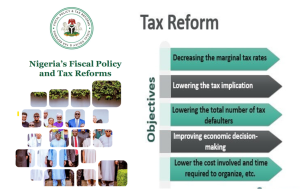
The introduction of a new tax regime in Nigeria, which took offon the 1st of January 2026, has sparked concerns among analysts and business leaders.
While government insists that the reforms will simplify taxation and ease pressure on low-income earners and small businesses, many experts argue that the reality on the ground may be more complicated.
Concerns Raised by Analysts and Business Leaders
Premature commencement date: Registrar/CEO of the National Institute of Credit Administration of Nigeria (NICA), Professor Chris Onalo has questioned the commencement date, citing a lack of awareness and education about the new tax regime.
Disincentive to credit-based economy: Onalo argued that the new tax regime could increase the cost of doing business and undermine access to credit, which is a key component of a credit-based economy.
Impact on capital market: Group Managing Director/CEO of Lancelot Ventures Limited, Mr. Adebayo Adeleke, noted that, the new tax regime has major consequences for the nation’s capital market, particularly in the area of capital gains tax.
Concerns from SMEs: Small and medium-scale enterprises (SMEs) have expressed concerns that the reforms could raise operating costs, deepen compliance burdens, and slow investment, despite government assurances of relief.
Arguments For and Against the New Tax Regime

Proponents: Official business groups, such as the Abuja Chamber of Commerce and Industry (ACCI), argue that the reforms could benefit SMEs in the long run by eliminating multiple taxation and bringing predictability to government revenue collection.
Critics: SME operators and business groups, such as the former president of NACCIMA, Dele Kelvin Oye, cautioned that, some elements of the new tax laws, including higher capital gains tax and new levies, could reduce retained earnings and discourage expansion, particularly for small and growing firms.
Quotes from Key Stakeholders
Professor Chris Onalo: “The tax regime is a disincentive to a credit-based economy… Government should do more public enlightenment using all platforms, so that you can educate people.”
Mr. Adebayo Adeleke: “The new tax regime has major consequences on the nation’s capital market, especially in the area of capital gains tax.
Dele Kelvin Oye: “SMEs are the most vulnerable to sudden policy shifts because they lack the buffers large corporations use to absorb regulatory shocks.”
Chief Emeka Obegolu: “A clearer, more transparent tax system would improve competitiveness and planning for small businesses.”
Joseph Tegbe: “Implementation will not harm businesses, and consultations are ongoing to ease the transition.”
Conclusion
The introduction of the new tax regime in Nigeria has sparked a lively debate among analysts and business leaders. While the government insists that the reforms will simplify taxation and ease pressure on low-income earners and small businesses, many experts argue that more awareness and review are needed to ensure a smooth transition.





