World Wetlands Day: Why Nigeria Must Protect Natural Economic Assets
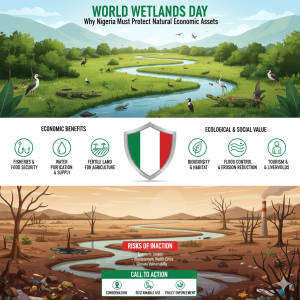
As the world marks World Wetlands Day, Nigeria is being reminded that some of its most valuable economic assets are not found in oil wells or mineral deposits, but in its wetlands, the mangroves of the Niger Delta, the floodplains of the Niger and Benue rivers, and the coastal marshes that stretch across the southern belt of the country.
These ecosystems quietly support millions of livelihoods, protect communities from climate shocks and sustain food production. Yet, they remain among the most threatened natural resources in the country.
Wetlands play a critical role in Nigeria’s economy. They support fisheries that feed households and generate income for coastal and riverine communities. They provide fertile land for rice cultivation and vegetable farming. They also act as natural flood control systems, absorbing excess water during heavy rains and reducing the cost of disaster response and infrastructure repairs.
When wetlands are destroyed, the economic consequences are immediate, declining fish stocks, lower agricultural yields, increased flooding and rising poverty.
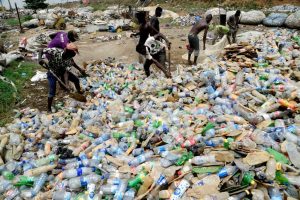
Despite their importance, Nigeria’s wetlands are under siege from unchecked urban expansion, oil pollution, sand mining, waste dumping and weak enforcement of environmental regulations.
In the Niger Delta, oil spills have degraded mangrove forests that once sustained fishing and tourism activities. In rapidly growing cities such as Lagos and Port Harcourt, wetlands are being reclaimed for housing and commercial projects, often without proper environmental impact assessments. The result is increased flooding, loss of biodiversity and higher public spending on drainage and emergency relief.

For an economy already grappling with inflation, unemployment and climate-related risks, neglecting wetlands is a costly mistake. The damage to wetlands translates directly into economic losses. Flood disasters disrupt businesses, destroy farms and displace communities, while government resources are diverted from development projects to emergency interventions.
Protecting wetlands is, therefore, not just an environmental responsibility; it is sound economic policy.
On this World Wetlands Day, Nigeria must shift from symbolic commitments to practical action. The federal and state governments should strengthen enforcement of environmental laws, expand protected wetland areas and integrate wetland conservation into national development planning. Environmental impact assessments must be treated as mandatory safeguards, not mere formalities.
At the same time, communities living around wetlands should be empowered through sustainable livelihood programmes that reduce dependence on destructive practices.
The private sector also has a role to play. Real estate developers, oil companies and agribusinesses must adopt environmentally responsible practices and invest in restoration projects.
Corporate sustainability should go beyond public relations to measurable environmental impact.
Nigeria’s future growth depends on balancing development with conservation. Wetlands are natural infrastructure that provide services worth billions of naira each year, from flood protection to food security.
Losing them would mean higher economic vulnerability and deeper social challenges.
As the world reflects on the value of wetlands, Nigeria must recognise that, protecting these ecosystems is not a luxury. It is an investment in economic stability, climate resilience and long-term national prosperity.
The time to act is now, before irreversible damage turns a natural asset into a permanent liability.