
Analysts Urge Nigeria To Priortise Long Term Productivity Growth
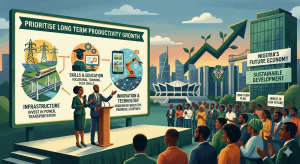
BY EZENWA ECHEBIRI
Analysts have urged Nigeria to. prioritise long-term productivity growth, expand electricity generation beyond 5,000 megawatts and invest in human capital if it hopes to reach the current global average income of $14,554 per capita over the next century.
Nigeria currently has a gross domestic product (GDP) per capita of below $2,000, down from around $3,200 in 2014, highlighting a widening gap between income growth and population expansion.
Experts warned that, without significant improvements in productivity, poverty and income stagnation could deepen over the long term.
With a population exceeding 200 million, usable electricity generation in Nigeria remains below 5,000 megawatts, severely constraining industrial capacity, manufacturing output, healthcare delivery, digital infrastructure and foreign direct investment inflows.
By comparison, South Africa generates over 50,000 megawatts, while China produces more than two million megawatts, underscoring the link between energy availability and industrial depth.
Data show that more than 130 million Nigerians live in multidimensional poverty, while over 40 per cent of the workforce operates in low-productivity informal sectors. Though the economy has expanded nominally at various points, real per capita income growth has lagged behind population growth, creating structural imbalances.

Analysts note that, no country has achieved sustained poverty reduction through redistribution alone. Nations such as China, Singapore, Malaysia and India recorded rapid poverty decline by boosting output per worker, strengthening industrial capacity and investing in human capital and infrastructure.
Energy remains central to Nigeria’s growth equation. Sub-5,000-megawatt generation capacity translates into higher operating costs for manufacturers and small businesses, limited value addition across supply chains, and weaker competitiveness. Experts say scaling gas infrastructure, solar deployment, grid modernisation and distributed energy systems is critical to reversing the productivity slowdown.
Nigeria’s young population, with a median age under 19, presents both opportunity and risk. Analysts argue that without improvements in education, skills development and labour productivity, rapid population growth could amplify unemployment and economic fragility.
Urban centres including Lagos, Abuja, Port Harcourt, Kano and Aba hold significant growth potential, but infrastructure deficits, logistics bottlenecks and regulatory inconsistencies continue to suppress scale advantages. Greater integration within the Economic Community of West African States (ECOWAS) and broader African markets is seen as essential to lowering transaction costs and expanding export competitiveness.
To reach $14,554 per capita within the next century, economists say Nigeria would require sustained annual productivity-driven growth supported by stable institutions, consistent policy, and long-term investment in power, ports, transport, technology, data and artificial intelligence (AI).





