
Economic Activities Soar In States As Political Parties Prepare For Govs Primary Elections
BY CEES HARMON
Political activities are intensifying across Nigeria, especially, at the State level as parties begin consultations and mobilisations ahead of governorship primaries, a development economists said, could have mixed implications for state economies, public spending, and business confidence.
Major parties, including the All Progressives Congress(APC), Peoples Democratic Party(PDP), and Labour Party(LP), have commenced internal processes to select candidates, triggering early campaign spending and heightened political engagement at the state level.
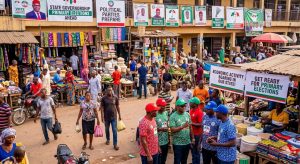
Campaigns are already injecting liquidity into local economies through spending on logistics, Advertising, transportation, accommodation and event management.
“Election cycles can temporarily boost economic activity, especially in sectors like media, transport, hospitality, and printing. There is increased cash flow, and small businesses often benefit from campaign-related spending,” said a political economist in Lagos, George Adefarasin.
In Kano, hotel operator Sadiq Musa said, bookings have risen sharply since political consultations began. “We are seeing more party officials, delegates, and support groups coming in. Business is better than it was a few months ago,” he said.
Similarly, in Port Harcourt, an Uber driver, Emeka Obi, said demand for transport services has increased. “During rallies and meetings, we carry more passengers, and sometimes fares go up because of demand,” he noted.
However, economists caution that the influx of cash into the system can also fuel inflationary pressures..
“When large amounts of money are spent in a short period, it can push up prices of goods and services. This is especially true in areas where supply is limited,” said a lecturer at Lagos State University, Dr. Tom Olaleye.
A food vendor in Ibadan, Kemi Adeyemi, said prices of staples have already begun to edge higher during political gatherings. “Whenever there is a rally, demand increases, and we adjust prices slightly. It’s not just us; everything becomes more expensive,” she said.

Analysts also warn that campaign season could put pressure on state finances, particularly where incumbents increase spending to secure political support.
“Election periods often coincide with higher public spending, sometimes outside planned budgets. This can widen fiscal deficits and reduce fiscal discipline,” said a public finance analyst, Alfred Igbrude.
There are concerns that governance may take a back seat as political activities intensify.
A civil servant in Enugu, who declined to be named, said project implementation often slows during election cycles. “Attention shifts to politics, and many approvals or payments are delayed,” he said.
Beyond immediate spending, the political season may create uncertainty that affects investment decisions.
“Investors tend to adopt a wait-and-see approach during election periods. They want clarity on policy direction before committing capital,” one road contractor told this medium.
A Lagos-based manufacturing executive, Adebayo Johnson said, his firm is holding off on expansion plans. “We are watching developments closely. Policy direction after the elections will determine our next move,” he said.
Despite the risks, analysts said, the election season presents an opportunity for economic engagement.
“Campaigns should not just be about politics; they should be about policy. This is a chance for candidates to present clear economic plans for their states,” Johnson said.
Civil society groups are also urging candidates to focus on economic issues. “We want to hear concrete plans on jobs, infrastructure, and revenue generation, not just political rhetoric,” said Ngozi Ekwueme, a policy advocate in Abuja.
As governorship primaries approach, the economic impact of campaign activities is expected to intensify across states.
While short-term spending may provide a boost to local economies, experts warn that the longer-term effects will depend on fiscal discipline, transparency, and the quality of economic policies proposed by candidates.





