
Nigerians Defy Economic Hardship With Last-Minute Sallah Preparations
BY CEES HARMON, SAMUEL OPEYEMI and GBENGA ELIJAH, Abuja
Despite economic hardship in the country, Muslims across Nigeria are preparing for the Eid-el-Kabir celebration, although, with lean budget, *BUSINESSDIARY* can now reveal.
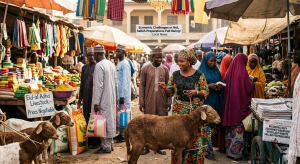
Preparation for sallah peaked at the weekend as Nigerians besieged market places, shopping malls, Rams market, among others in last-minute preparation for the sallah.
This led to resurgence of traffic in some parts of Lagos and Ogun States and its expected to continue into the new week.
.
The celebration, one of the most important festivals in Islam, commemorates the willingness of Prophet Ibrahim to sacrifice his son in obedience to God.
In Nigeria, the festival is marked by prayers, animal sacrifices, family gatherings, charity, and extensive travel across States.
Economic activities traditionally surge during the Sallah period as traders, transport operators, livestock dealers, food vendors, and hospitality businesses record increased patronage.
Markets in major commercial centres such as Lagos, Kano, Kaduna and Abuja have witnessed growing activities ahead of the celebrations, especially in the sale of rams, cows, rice, vegetable oil, clothing and household items.
A livestock trader in Lagos, Musa Abdullahi, said patronage had improved slightly compared to previous weeks but remained below expectations due to economic hardship.
According to him, “People still want to celebrate Sallah, but many families are bargaining heavily because things are expensive. Transportation costs and feeding animals have made prices higher this year,” he said.
Several transport operators also reported increased passenger movement as Nigerians travel to reunite with their families. Some interstate transport companies announced upward adjustments in fares due to rising fuel prices and increased demand during the festive season.
A commercial bus operator in Abuja, Ibrahim Salisu said, transport fares had risen because of operational costs.
“Fuel prices are affecting everybody. During festive periods, demand increases.and transporters also face pressure from maintenance costs and spare parts,” he explained.
Economic analysts said, the Sallah celebration often provides temporary stimulus for informal economic activities, particularly, among small businesses and rural livestock markets.
According to them, the festival boosts cash circulation across sectors such as transportation, agriculture, catering, fashion, and telecommunications.
An economist at Lagos Chamber of Commerce and Industry(LCCI) , Moses Ojake said, festive spending usually stimulates short-term economic activity despite broader macroeconomic challenges.
“Sallah creates temporary economic momentum because people spend more on food, transportation, clothing, and entertainment. However, inflation has weakened consumers’ purchasing power, meaning the impact may not be as strong as in previous years,” he said.
Analysts noted that, this year’s celebration is taking place under difficult economic conditions marked by high inflation, elevated food prices, and reduced household purchasing power following recent economic reforms, including fuel subsidy removal and exchange rate liberalisation under President Bola Tinubu.
Some residents said, they would scale down spending due to financial constraints, opting for smaller family gatherings and reduced purchases compared to previous years.
A civil servant in Lagos, Aisha Bello said, many families were adjusting their plans to reflect present economic realities.
“In the past, people bought more rams and shared more food, but this year, many families are managing according to their income. The spirit of Sallah is still there, but people are more careful with spending,” she said.

Market surveys in Kano, Kaduna, Lagos and other parts of the country show that ram prices range from about N150,000 for smaller animals to as much as N1 million for larger breeds, depending on size and location. Sellers attribute the high prices to increased transportation expenses, rising feed costs and broader economic pressures.
The situation has also affected food markets, where traders say demand has risen steadily in anticipation of Sallah. Recent inflation data show continued increases in the prices of staple foods including tomatoes, pepper, beans, yam, garri, beef and other essential commodities commonly used during festive meals.
A report released this month indicated that the average cost of preparing a pot of jollof rice for a family of five climbed to N30,435 in the first quarter of 2026, reflecting the impact of higher fuel prices and logistics costs on food supply chains.
Interstate motor parks across Abuja have recorded a sharp increase in passenger movement as travellers journey to their hometowns ahead of the holiday.
Transport operators attributed the surge in fares to rising fuel prices, vehicle maintenance costs and increased seasonal demand.
Findings at several motor parks showed that transport fares from Abuja to Lagos have risen to between N40,000 and N45,000 for 18-seater buses, compared to about N27,000 earlier in the year. Travellers heading to Makurdi now pay as much as N8,500, while fares to Jos range between N20,000 and N30,000.
A civil servant waiting for a bus in Area 1 in Abuja said, many passengers now spend considerable time negotiating fares before boarding vehicles.
“Every naira matters now. People negotiate transport fares the same way they negotiate food prices in the market,” he said.
At livestock markets in Dei-Dei, Kubwa and Bwari, buyers crowded ram sellers’ stands in search of affordable animals for the symbolic Eid sacrifice.
Traders disclosed that ram prices this year range from about N250,000 for smaller breeds to more than N350,000 for bigger sizes, depending on weight and quality.
Despite the busy atmosphere at the markets, many residents described the prices as unaffordable.
A resident in Kubwa said he had abandoned plans to purchase a ram and would instead settle for a goat.
“A good ram is now beyond the reach of many average families. People are adjusting according to what they can afford,” he said.
Livestock dealers blamed the increase on transportation costs, insecurity along supply routes from northern states and the rising cost of animal feed.
The rising cost of food items has further compounded the burden on families preparing for the celebration.
Across several markets in Abuja, a 50kg bag of rice now sells for between N60,000 and N65,000, while prices of tomatoes and pepper continue to rise.
Traders at Wuse Market attributed the persistent increase to high transportation costs from farming communities to urban centres.
Religious leaders have, meanwhile, urged Nigerians to use the occasion to promote peace, sacrifice, tolerance and support for vulnerable citizens.
The Chief Imam of a central mosque in Lagos, Sheikh Musa Haruna, called on Nigerians to embrace unity and compassion during the celebrations.
“Sallah is not only about slaughtering animals; it is about sacrifice, obedience, and caring for one another. We must remember the poor and pray for peace and stability in the country,” he said.
Security agencies said, they had deployed personnel to prayer grounds, markets, highways, and recreational centres to ensure peaceful celebrations, while traffic management officials announced measures to ease congestion in major cities during the holiday period.
Social observers noted that, beyond its religious significance, Sallah remains one of Nigeria’s strongest instruments of social cohesion, bringing together families, neighbours, and communities across ethnic and regional divides.
Despite economic pressures, many Nigerians expressed optimism that the festival would still provide moments of relief, unity and spiritual reflection for millions across the country.





