
After N1. 07trn Recapitalisation, NAICOM, NIA Advocate Stronger Underwriting, Faster Claims

BY ZAKA KHALIQ
Nigeria’s insurance industry has been charged to translate the more than N1.079 trillion in post-recapitalisation capital into stronger underwriting capacity, faster claims settlement, innovation and greater public trust.
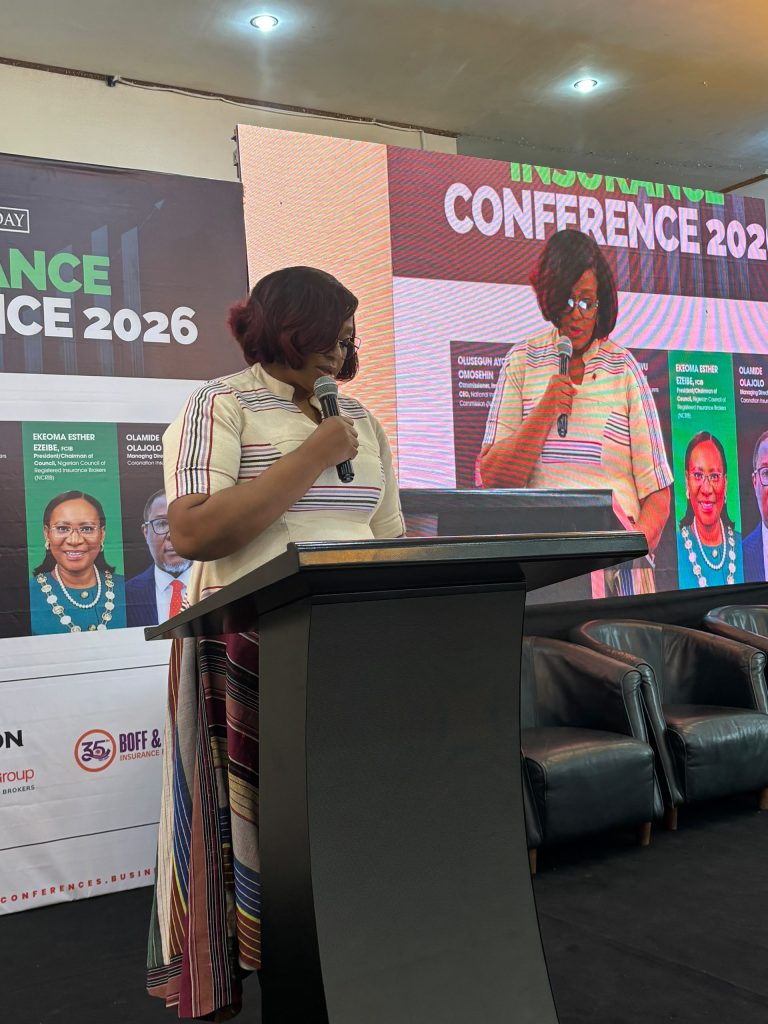
The commissioner for Insurance and chief executive officer of the National Insurance Commission (NAICOM), Mr. Olusegun Ayo Omosehin as well as the chairman of the Nigerian Insurers Association (NIA), Mrs. Ebelechukwu Nwachukwu, gave the charge yesterday at the BusinessDay Insurance Conference 2026 in Lagos on Wednesday.
Speaking at the conference themed, ‘From Capital to Capacity: Driving Growth, Innovation and Trust in Nigeria’s Insurance Sector,’ the two industry leaders said, the completion of the recapitalisation exercise marked the beginning, rather than the end, of a new phase for the sector.
Nwachukwu said, the recapitalisation had produced a stronger industry capable of underwriting larger and more complex risks, supporting infrastructure development, expanding compulsory insurance and driving financial inclusion.
She disclosed that 50 insurance and reinsurance companies successfully met the new capital requirements, with the exercise generating capital in excess of N1.079 trillion.
According to her, the capital injection had also attracted domestic and foreign investment into the industry as investors responded to stronger governance, a clearer regulatory environment and improved growth prospects.
But the NIA chairman warned operators against treating recapitalisation as an achievement in itself.
“The capital is in place. The legal framework is in place. The question before every boardroom now is what do we do with it?”
She said the real test of the reform would be whether stronger balance sheets translated into better services and tangible benefits for policyholders.
Capital is not the destination. It is the foundation, she said, stressing that, the value of recapitalisation would ultimately be judged by what it delivers to policyholders rather than what appears on company balance sheets.
Nwachukwu identified sound underwriting, prudent risk management, customer-centric service and sustainable growth as critical priorities for the post-recapitalisation era.
She also called for greater use of technology, InsurTech partnerships, digital channels and innovative products to reach underserved Nigerians and expand insurance penetration.
Omosehin, in his keynote address, similarly warned that the industry must move beyond measuring success by the volume of capital raised. Capital without capacity is merely a number on a balance sheet,” he said.
According to the NAICOM boss, the purpose of stronger capital is to create the capacity to underwrite risks, pay claims, innovate, inspire confidence and support economic growth.
He said, the next phase of the reform must therefore focus on whether recapitalisation has strengthened underwriting capacity, enhanced claims-paying ability, improved customer satisfaction and increased public confidence.
“Capital becomes meaningful only when it translates into better service delivery, stronger governance, technological advancement, prompt claims settlement, product innovation and improved customer experiences,” Omosehin said.
He noted that, Nigeria’s expanding population, entrepreneurial economy, infrastructure investments, digital economy, agricultural transformation and growing middle class present significant opportunities for the insurance industry.

However, he said, these opportunities could only be captured by institutions with sufficient financial and human capacity.
Omosehin said, capacity must include the ability to underwrite major infrastructure projects, retain more risks within Nigeria, develop products for emerging risks and extend insurance protection to underserved communities.
Claims payment key to restoring trust
Both the NAICOM boss and NIA chairman placed claims settlement and customer confidence at the centre of the industry’s next phase.
Omosehin described trust as the invisible foundation of insurance, warning that, delayed or unresolved claims could undermine efforts to expand penetration.
Claims payment is the most visible proof of insurance value, he said, adding that, every settled claim strengthens confidence, while delayed claims weaken it.
Nwachukwu similarly declared that, ‘trust is the currency of our industry,’ urging insurers to make prompt claims settlement a defining culture across the market.
She said, the NIA would promote professionalism and market conduct while working with NAICOM to ensure that recapitalisation produced tangible benefits for policyholders and other stakeholders.
The association, she added, would champion claims excellence, encourage disclosure of claims payments and strengthen advocacy, regulatory guidance and capacity-building initiatives.
NAICOM pushes technology, human capital
Omosehin also identified technology and human capital as critical drivers of the sector’s transformation.
He said, the modern insurance customer increasingly demands convenience, speed, transparency, personalisation and simplicity, making innovation indispensable to the industry’s relevance.
He urged insurers to leverage data analytics, artificial intelligence, digital channels and InsurTech partnerships to simplify insurance and make products more accessible and affordable.
The future belongs to insurers that embrace innovation,, he said.
The commissioner also warned that financial capital alone would not deliver the desired transformation without investment in people.
He called for stronger professional education, ethical leadership and continuous learning, particularly as insurers confront increasingly sophisticated risks including cyber threats, climate-related exposures, supply-chain disruptions, artificial intelligence risks, pandemics and geopolitical uncertainties.
Nwachukwu said, the NIA would similarly strengthen expertise in energy insurance, climate-related insurance, agricultural insurance, reinsurance, risk management and governance, while supporting digital distribution and products targeted at underserved Nigerians.
Industry urged to turn reform into growth
The two speakers agreed that the post-recapitalisation phase requires stronger collaboration among regulators, insurers, reinsurers, brokers, investors, technology providers and the media.
Omosehin said, regulators must provide vision and oversight, insurers must demonstrate innovation and operational excellence, brokers must deepen professional advisory services, while the media must continue to educate the public.
For Nwachukwu, the industry’s immediate task is to ensure that the capital mobilised through recapitalisation translates into capacity, resilience, innovation and trust.
She said, the NIA was ready to work with all stakeholders to ensure that the reform produces a stronger and more responsive insurance market.
The conference therefore marks a shift in industry priorities—from the question of how much capital insurers have raised to what that capital can deliver in terms of risk protection, investment, claims payment, customer confidence and economic development.
As Omosehin put it, the industry’s next chapter must convert capital into capability, capability into innovation, innovation into trust and trust into sustainable growth.





