
Atiku: Tinubu’s Policies Deepen Nigeria’s Cost-of-Living Crisis
BY ADEYEMI OBADIMU
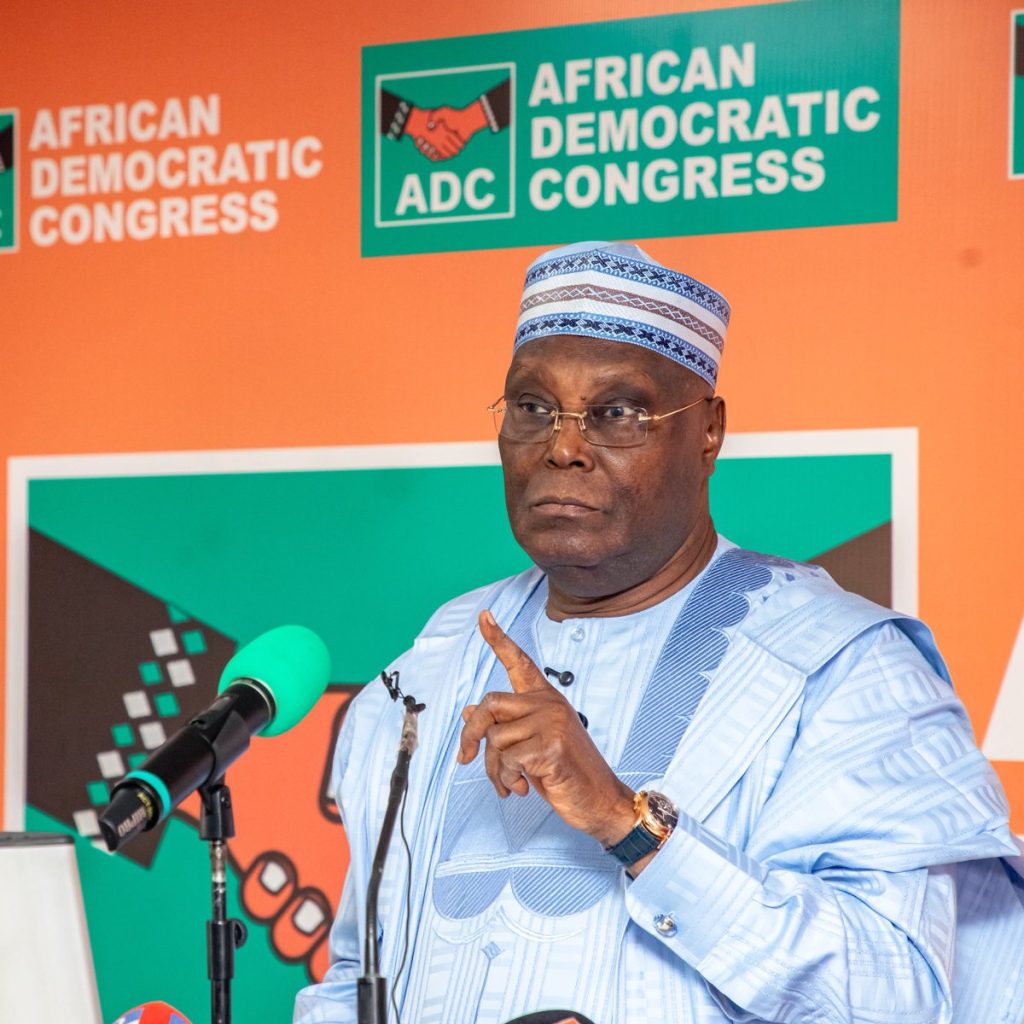
Former vice-president and African Democratic Congress (ADC) presidential candidate, Atiku Abubakar, has accused President Bola Ahmed Tinubu’s administration of worsening Nigeria’s cost-of-living crisis, arguing that economic growth figures have yet to translate into improved living conditions for millions of Nigerians.
Atiku made the claim in his Independence Day state-of-the-nation address delivered at the ADC headquarters in Abuja on Thursday, October 1, 2026, where he criticised the Federal Government’s economic policies and questioned its claim that Nigeria had entered an era of prosperity.
According to him, the economic reforms implemented by the Tinubu administration, particularly the removal of petrol subsidy, have increased the cost of transportation, food and other essential goods while placing additional pressure on household incomes.
Atiku said the government’s emphasis on declining inflation, economic growth and increased exports did not adequately reflect the economic reality confronting ordinary Nigerians.
He argued that although a slower rate of inflation represented a change in the pace of price increases, it had not reversed the substantial rise in the prices of food, medicine, transportation and other necessities.
“Bola says inflation has fallen. A slower rise in prices does not restore what families have lost,” Atiku said.
He added that economic growth and rising exports should ultimately improve the welfare of citizens, arguing that businesses deserved credit for their contribution to the economy but that macroeconomic indicators alone should not be treated as evidence of broad-based prosperity.
The former vice-president also questioned the impact of petrol subsidy removal, saying the policy had contributed to higher transportation and logistics costs and, consequently, increased the cost of moving food and other goods across the country.
He proposed a capped and budgeted production subsidy for petrol refined within Nigeria, including fuel produced by modular refineries, as an alternative approach to reducing pump prices and supporting domestic refining.

Under the proposal, Atiku said the benefit should be passed directly to consumers through lower petrol prices, while the cost of the programme and government payments would be publicly disclosed and independently audited.
“The principle is simple: produce here, refine here, create jobs here and pay less here,” he said.
Atiku also criticised what he described as government waste and weak fiscal discipline, arguing that Nigerians were being asked to endure economic hardship while public spending remained high.
On insecurity, the ADC presidential candidate said armed groups continued to kill and displace Nigerians, while insecurity had also disrupted agricultural production by preventing farmers from accessing their fields.
He linked insecurity to the broader economic crisis, noting that farmers’ inability to cultivate their land could further undermine food supply and increase pressure on food prices.
Atiku’s position came shortly after President Tinubu, in his Independence Day address, declared that Nigeria had passed through the difficult phase of economic reforms and was now entering an era of shared prosperity.
Tinubu had defended the reforms, citing economic growth, declining inflation, rebuilt foreign reserves, improved foreign exchange stability and increased non-oil exports as evidence that the economy was moving in the right direction.
However, Atiku maintained that the success of economic policy should ultimately be measured by its impact on households and businesses.
He said Nigerians needed an economy where food was affordable, incomes could meet basic needs, businesses could operate at lower costs and citizens could access essential services without excessive financial pressure.
The exchange between the President and the opposition presidential candidate comes as political parties and potential contenders intensify preparations for the 2027 general elections, with the economy, cost of living, fuel pricing, insecurity and job creation expected to remain major issues in the political debate.





